
Mobile App
August 18, 2026
Do You Need a Mobile App or Just a Mobile-Friendly Website?
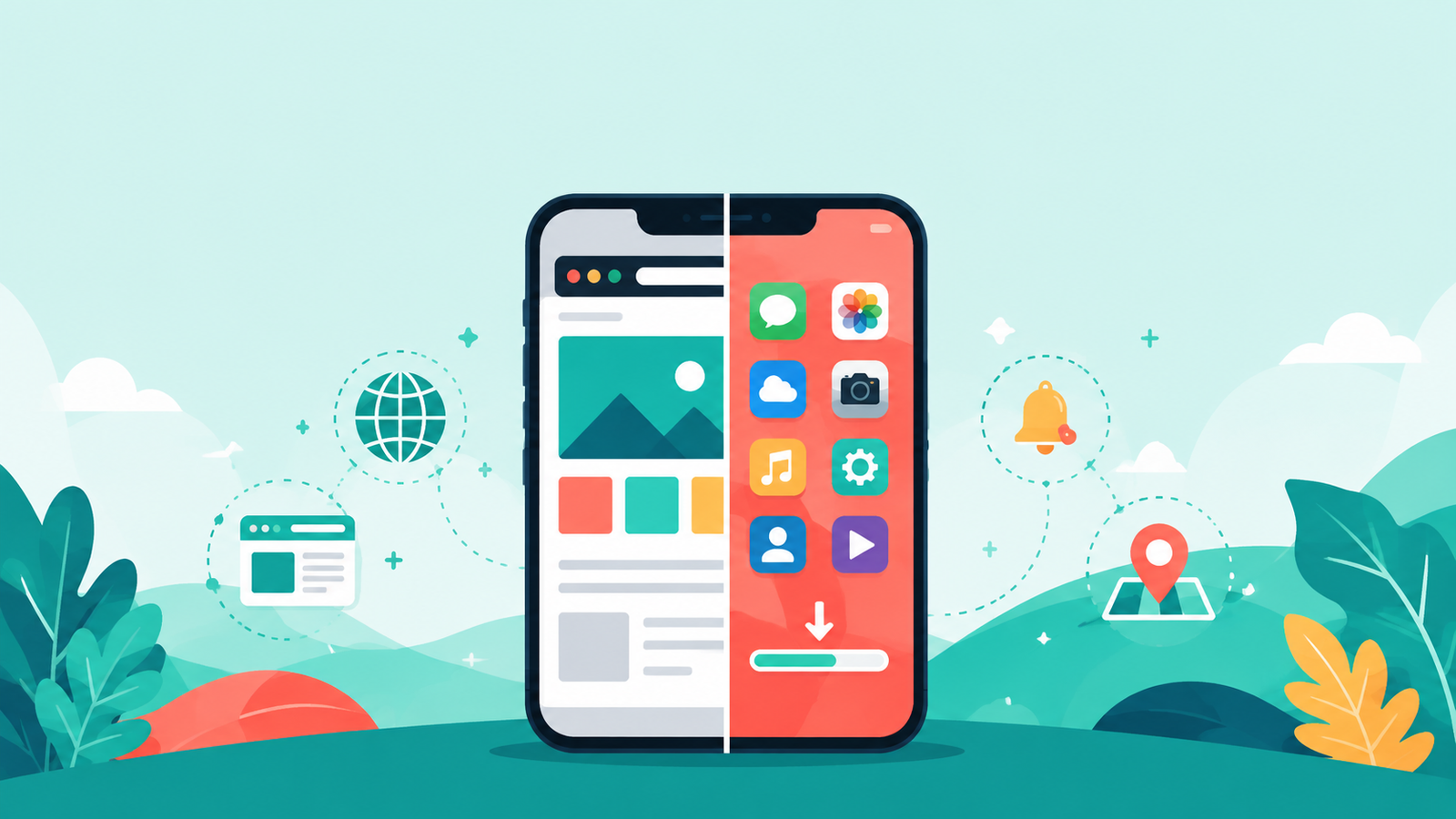
Someone in your DM's probably told you that you "need an app" to look serious. Or maybe you saw a competitor launch one and now you're panicking, wondering if you're falling behind. Before you spend millions building something you don't actually need, let's slow down and think this through properly.
Not every business needs a mobile app. In fact, a lot of businesses waste money building one when a simple mobile friendly website would have done the exact same job, for a fraction of the cost. Let's break down how to actually know which one is right for you.
## What a Mobile-Friendly Website Really Means
A mobile friendly website is just your regular website, built or optimized to look good and work properly on phones and tablets. No app store download, no installation, nothing extra required. Someone searches you on Google, taps your link, and your site adjusts itself to fit their screen perfectly.
Most businesses actually just need this. It's simpler, cheaper, and gets the job done for the vast majority of use cases like showing your services, taking bookings, displaying your menu, or letting people contact you.
## What a Mobile App Actually Offers
A mobile app is a separate piece of software your customers download from the App Store or Google Play. It lives on their phone as an icon, works offline in some cases, and can send push notifications directly to their screen.
Apps are built for a different kind of relationship with your customer. One where they're using your product regularly, maybe even daily, and where features like offline access, camera integration, or location tracking genuinely improve their experience.
## When a Website Is Enough
If your business mostly needs to inform, showcase, or convert visitors into leads or one time customers, a website will serve you just fine. This includes most small businesses, service providers, restaurants, consultants, real estate agents, and even most online stores just starting out.
A good mobile friendly website today can do almost everything people assume only an app can do. It can take payments, show your location, let customers book appointments, display your portfolio, and even send updates through browser notifications.
The biggest advantage here is reach. Nobody needs to download anything to see your website. They just click a link, whether it's from Google, Instagram, or a WhatsApp message, and boom, they're in.
## When You Actually Need an App
An app becomes worth the investment when your business depends on frequent, repeat engagement. Think about things like a food delivery service people use weekly, a fitness platform tracking daily workouts, a banking or fintech product, or anything that needs offline functionality like a notes app or an inventory system used in areas with poor internet.
If your business model relies on push notifications to bring users back constantly, or you need access to phone features like the camera, GPS, or biometric login in a deep way, that's usually a strong sign an app makes more sense than a website alone.
## The Cost Reality
This is the part most people don't think about early enough. A mobile friendly website is significantly cheaper and faster to build than a native app. You're building one thing that works everywhere.
An app usually means building for iOS and Android separately, unless you use something like React Native to build both at once. Then there's the App Store and Play Store approval process, ongoing updates, and maintenance that never really stops. Apps are a long term commitment, not a one time purchase.
If your budget is tight and you're just starting out, a website almost always makes more financial sense while you validate your business idea and start generating real revenue.
## A Smart Middle Ground
A lot of successful businesses actually start with a strong mobile friendly website first. It's faster to launch, cheaper to maintain, and lets you start getting customers immediately. Once you've proven the demand and understand exactly what your customers want, that's when building a dedicated app starts to make real sense, because now you're building it for people who already trust you.
This approach saves you from spending huge amounts of money on an app nobody downloads, which happens more often than people like to admit.
## Questions to Ask Yourself
Before deciding, be honest with yourself about a few things. Will people use this daily or weekly, or just occasionally when they need your service? Do you genuinely need offline access or deep phone features, or would a website do the exact same job? Can your budget realistically support building and maintaining a separate app long term?
If most of your answers point toward simplicity and occasional use, a website is your answer. If they point toward frequent use and deep functionality, an app might genuinely be worth it.
## Final Thoughts
There's no shame in starting with a website. In fact, it's usually the smarter move. Apps aren't a symbol of success, they're a tool, and like any tool, they only make sense when the job actually calls for them.
Not sure which one fits your business right now? Contact us today and let's have an honest conversation about what will actually move your business forward, without wasting your budget on the wrong solution.
#mobileapp
#websiteoptimization
#digitalmarketing
#smallbusiness
#customerexperience