
3D & AI Video
October 1, 2026
From Script to Screen: What a Real AI Video Production Timeline Looks Like
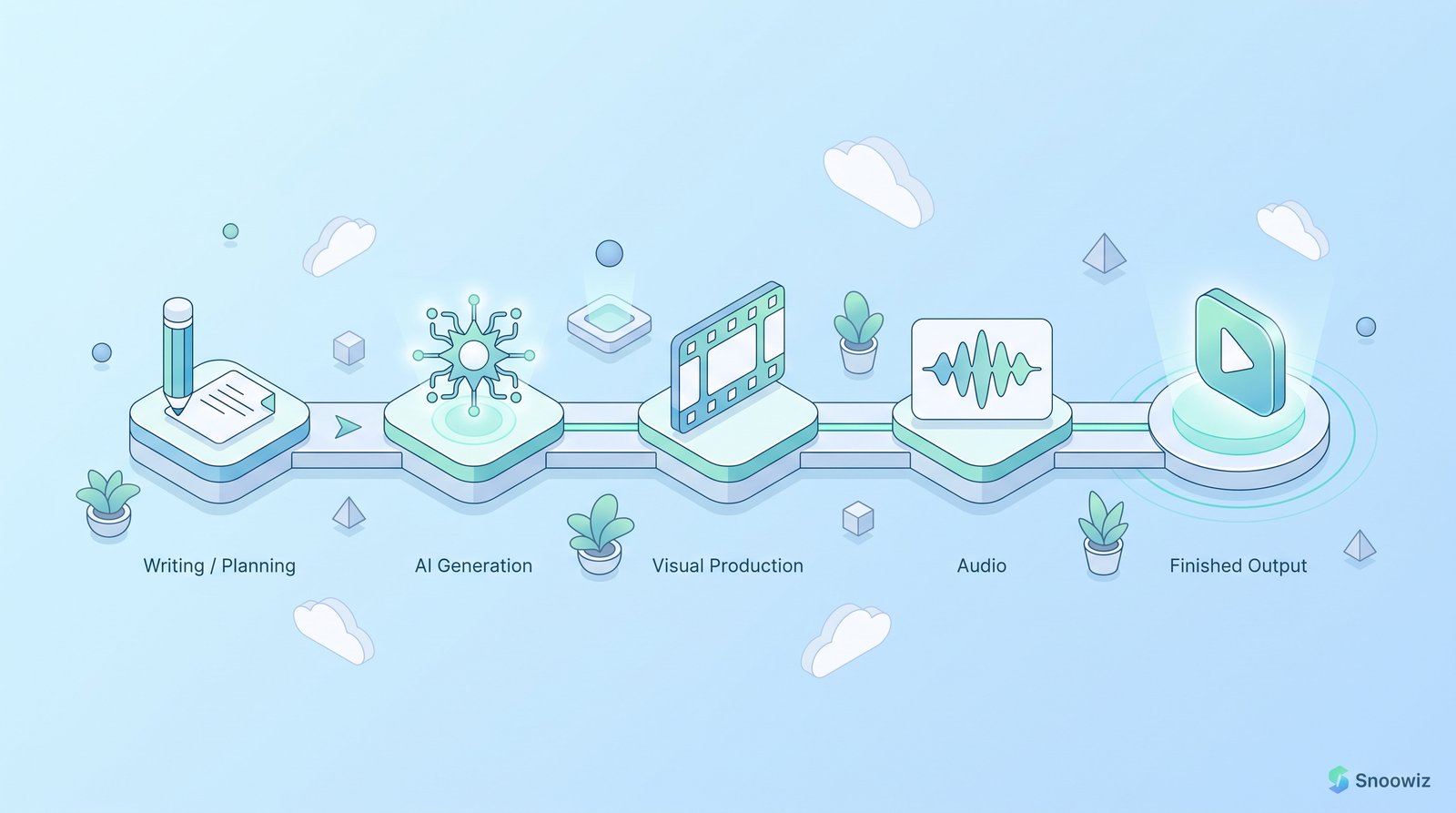
AI video tools have genuinely compressed production timelines compared to traditional filming — but "faster" doesn't mean "instant," and businesses expecting a finished, polished piece within hours of a first conversation are often working from an unrealistic picture of what a genuinely well-made AI-assisted video actually requires. Understanding the real stages involved, and roughly how long each genuinely takes, sets more accurate expectations and generally produces a better final result.
Why Skipping Stages Produces Worse Results, Even With Fast Tools
The speed advantage of AI video tools lies primarily in execution and iteration speed — generating and refining visuals faster than traditional filming would allow — not in eliminating the need for the underlying creative and strategic work that genuinely well-made video content has always required. Businesses that treat AI tools as a shortcut around proper planning, rather than an accelerant for executing a well-planned piece, consistently produce weaker results, regardless of how visually impressive the underlying generated content might look in isolation.
Stage 1: Concept and Strategy
What happens: Defining the actual purpose of the video — what specific outcome it needs to achieve, who the specific audience is, and what the core message or hook actually needs to be before any visual production begins.
Realistic timeframe: This stage can happen relatively quickly for a simple, well-understood project, but genuinely benefits from real thought rather than being rushed — skipping or rushing this stage is one of the most common reasons a technically well-executed video still underperforms, because the underlying strategy wasn't genuinely clear from the start.
Why this matters: Every subsequent stage depends on this foundation being genuinely clear — a beautifully produced video built on an unclear or poorly defined concept rarely performs well, regardless of how polished the execution is.
Stage 2: Scriptwriting and Structure
What happens: Translating the concept into an actual script or structured outline — including, critically, how the opening hook will work, given how much a video's performance depends on capturing attention within the first few seconds.
Realistic timeframe: Depends heavily on complexity, but genuinely benefits from at least one round of revision rather than treating a first draft as final — pacing and hook effectiveness are rarely perfect on the first attempt, even for experienced creators.
Why this matters: A weak script or poorly structured flow will produce a weak final video regardless of how visually impressive the subsequent AI-generated or rendered visuals turn out to be — strong visuals cannot fully compensate for a fundamentally weak underlying structure.
Stage 3: Visual Planning and Storyboarding
What happens: Mapping out the specific visual approach for each section of the script — what will actually be shown, how AI generation or rendering will be used for each specific moment, and how the overall visual style and pacing will come together.
Realistic timeframe: This stage benefits genuinely from real planning rather than improvising visuals during the generation stage itself — a clear storyboard, even a simple one, significantly speeds up and improves the actual generation and assembly stages that follow.
Why this matters: Attempting to figure out the visual approach simultaneously with actual generation tends to produce a less coherent, less deliberately paced final result than working from a clear plan established beforehand.
Stage 4: AI Generation and Rendering
What happens: The actual AI-assisted visual production — generating or rendering the planned visuals using the chosen AI tools, often involving multiple iterations and adjustments to get specific shots or sequences right.
Realistic timeframe: This is where AI tools genuinely accelerate the process compared to traditional filming, but it still requires real iteration time — rarely does the first generation attempt for every shot perfectly match what's needed, and refining specific elements takes genuine, deliberate time even with fast underlying tools.
Why this matters: Rushing this stage, accepting the first generation attempt without genuine refinement, is a common reason AI-generated content can look technically impressive but subtly "off" in ways that undermine its overall effectiveness.
Stage 5: Editing and Assembly
What happens: Assembling the generated visuals into the actual sequenced video, applying the pacing and cut timing decisions that determine whether the final piece actually holds attention effectively.
Realistic timeframe: This stage requires genuine time and editorial judgment regardless of how quickly the raw visual generation happened — pacing decisions, in particular, benefit from real iteration and critical review rather than a single, rushed assembly pass.
Why this matters: As covered in the importance of pacing specifically, this stage is where a technically well-generated set of visuals either becomes genuinely engaging content or falls flat — the editing and pacing decisions made here matter as much as the quality of the underlying generated visuals themselves.
Stage 6: Sound Design and Audio
What happens: Adding music, sound effects, and any voiceover or dialogue, mixed properly to support rather than compete with the visual content.
Realistic timeframe: Genuinely deserves dedicated time and attention, not a rushed afterthought tacked onto the end of the editing process — as covered in the importance of sound design, this stage significantly affects the final piece's perceived quality and should be treated with corresponding priority.
Why this matters: Skipping or rushing proper sound design is one of the most common, and most avoidable, reasons otherwise well-produced AI video content feels noticeably less polished than it could be.
Stage 7: Review, Refinement, and Final Output
What happens: A genuine critical review of the assembled piece — checking pacing, checking whether the hook genuinely works, checking overall coherence — followed by final adjustments before the piece is considered finished.
Realistic timeframe: Worth building in real time for at least one genuine round of critical review and refinement, rather than treating the first full assembly as automatically final — fresh critical perspective at this stage often catches issues that become less visible after extended, close involvement with the same content throughout the earlier stages.
Why this matters: The difference between a good piece and a genuinely strong piece often comes down to this final refinement stage, where real critical distance reveals opportunities for improvement that weren't apparent during the earlier, more immersed production stages.
What a Realistic Overall Timeline Looks Like
For a well-executed, moderately complex AI-assisted video — not a simple, single-shot piece, but not an elaborate, highly complex production either — a genuinely thorough process spanning concept through final output reasonably takes days rather than hours, even with AI tools significantly accelerating the generation stage specifically. This is dramatically faster than equivalent traditional production would typically require, but it's not instant, and businesses planning content calendars around AI video should build in realistic time for each of these stages rather than assuming AI tools alone compress the entire process down to a matter of hours.
Why Rushing This Process Specifically Backfires
Content produced by skipping or severely compressing these stages — particularly the strategic, scripting, and editing stages, which benefit less directly from AI tool speed than the raw generation stage does — tends to look visually impressive on a surface level while underperforming on actual engagement and effectiveness, precisely because the underlying strategic and craft work that genuinely drives performance was shortchanged in favor of speed.
The Bottom Line
AI tools have genuinely transformed what's achievable within a given timeline and budget for video content — but the stages that have always mattered for genuinely effective video — clear strategy, strong scripting, deliberate pacing, proper sound design, genuine critical refinement — still require real time and attention, even as the raw visual generation itself happens faster than ever. Planning realistically around this full process, rather than assuming AI tools eliminate the need for it entirely, is what actually produces video content that performs, not just content that looks impressive in isolation.
#snoowiz
#aivideoworkflow
#videopreproduction
#contentproduction