
Mobile App
October 1, 2026
Post-Launch: What Nobody Tells You About Maintaining a Mobile App
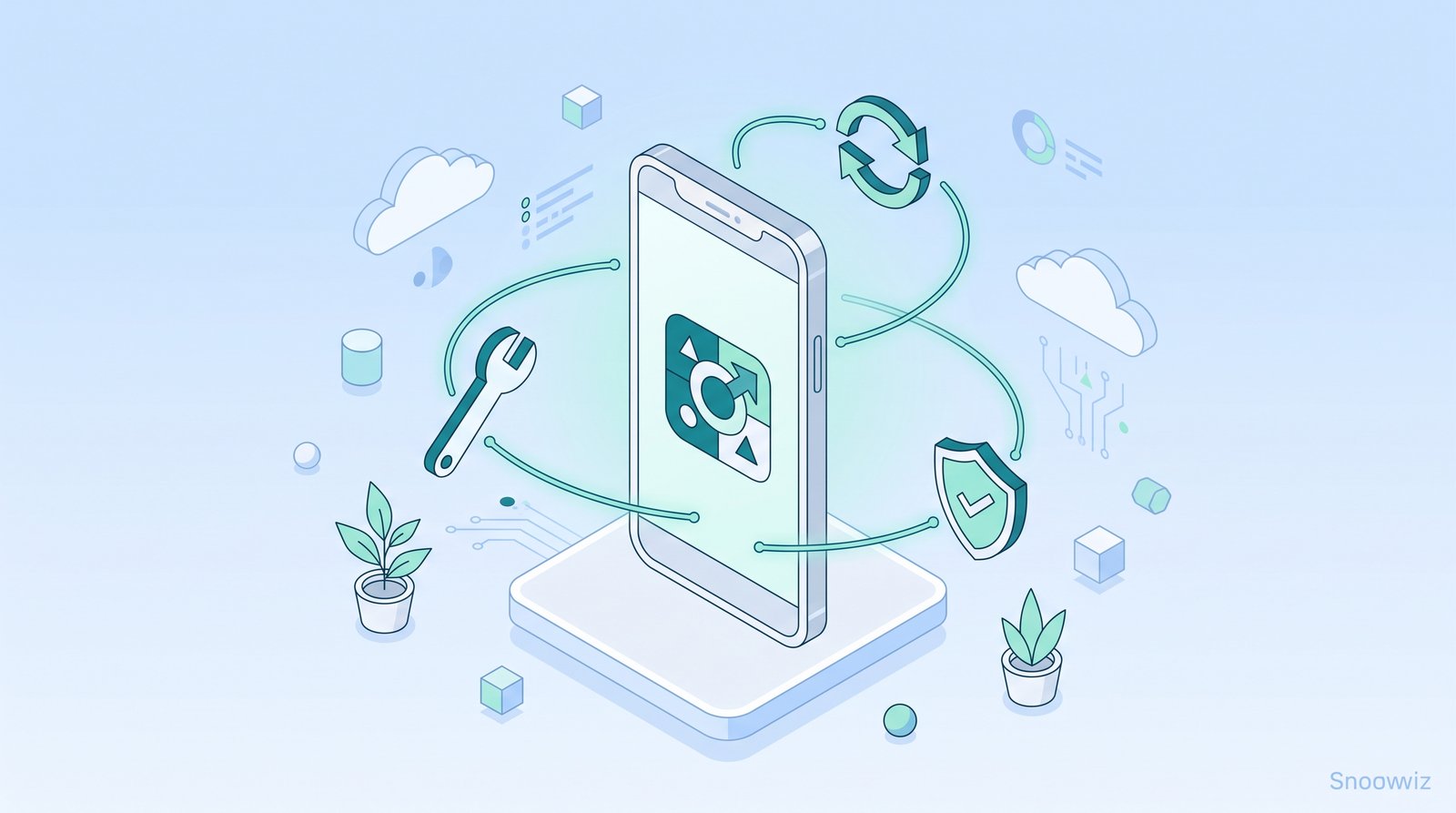
Most conversations about building a mobile app focus almost entirely on getting to launch — the development process, the App Store approval, the launch strategy. What rarely gets discussed with the same attention is what happens for the months and years afterward, which turns out to be where a genuinely large share of an app's real, ongoing cost and effort actually lives. Founders who plan only for launch, without planning for what comes after, often find themselves genuinely unprepared for the real, ongoing demands of keeping an app functioning well over time.
Why Post-Launch Maintenance Is Often Underestimated
Launch feels like the finish line because it's the most visible, celebrated milestone — the moment an idea becomes a real, live product. But an app, unlike a one-time deliverable, exists in a constantly shifting environment: operating systems update, devices change, user expectations evolve, and the business itself grows and changes. An app that isn't actively maintained against this ongoing change doesn't stay static — it gradually degrades, becoming slower, buggier, and eventually incompatible with current devices and platform requirements, even if the original code never technically "broke."
What Ongoing Maintenance Actually Involves
1. Operating system compatibility updates Both iOS and Android release regular updates, and apps need periodic updates to remain fully compatible and take advantage of current platform capabilities — an app left unmaintained against these ongoing platform changes can gradually develop compatibility issues, performance problems, or eventually stop functioning correctly on current devices entirely.
2. Security patches and vulnerability management Security vulnerabilities are discovered over time in underlying frameworks, libraries, and dependencies an app relies on — ongoing maintenance includes monitoring for and addressing these vulnerabilities, which is a genuine, ongoing responsibility rather than a one-time concern addressed only at initial launch.
3. Bug fixes based on real-world usage No amount of pre-launch testing catches every issue — real users, on real devices, in real conditions, inevitably surface bugs and edge cases that weren't caught during development, and addressing these as they're discovered is an ongoing, continuous process rather than a finite, completable task.
4. Performance monitoring and optimization As a user base and data volume grow, performance issues that weren't apparent at a smaller scale can emerge — ongoing monitoring and optimization work is needed to ensure the app continues performing well as actual usage patterns and scale evolve beyond initial launch conditions.
5. App store policy compliance Both Apple and Google periodically update their platform policies and requirements — an app needs ongoing attention to remain compliant with evolving requirements, since non-compliance can result in an app being removed from the store entirely, not just a minor inconvenience.
6. Feature updates based on genuine user feedback A launched app isn't a finished product — ongoing user feedback reveals genuine opportunities for improvement, new features, or adjustments to existing functionality that weren't apparent before real users began interacting with the actual, live product.
The Real Cost Structure Founders Often Miss
Maintenance isn't a one-time cost factored into the initial development budget — it's an ongoing, recurring cost for as long as the app remains active. This is one of the most commonly underestimated aspects of app development financial planning: founders often budget thoroughly for initial development but significantly underestimate the ongoing, recurring resources required to keep the app functioning well well beyond the initial launch period.
A reasonable rule of thumb many experienced teams use: ongoing annual maintenance often represents a meaningful percentage of the original development cost, recurring every year the app remains active — a cost that compounds over the app's actual lifetime far beyond the one-time initial development investment, and one that's easy to underweight when initial planning focuses primarily on reaching launch.
What Happens When Maintenance Is Neglected
Gradual performance degradation An unmaintained app doesn't fail dramatically and immediately — it degrades gradually, becoming slower, buggier, and less reliable over time as the surrounding platform and device ecosystem continues evolving around a static, unmaintained codebase.
Eventual incompatibility and forced removal Platform policy and technical requirement changes eventually reach a point where an unmaintained app simply stops functioning correctly, or gets removed from app stores entirely for failing to meet current compliance requirements — a genuinely severe, often difficult-to-reverse outcome for a neglected app.
Accumulating user frustration and churn Users experiencing a gradually degrading app — slower performance, more bugs, features that stop working correctly — don't typically file detailed bug reports; they simply stop using the app and often leave negative reviews, both of which compound the app's decline further over time.
Rising cost of eventual remediation An app that's been neglected for an extended period often requires significantly more extensive, costly work to bring back up to current standards than the cumulative cost of smaller, ongoing maintenance would have required — deferred maintenance tends to compound in cost, not simply accumulate linearly.
Planning for Maintenance Properly From the Start
1. Budget for ongoing maintenance as a distinct, recurring line item from the beginning Rather than treating maintenance as an afterthought to be figured out after launch, building a realistic ongoing maintenance budget into the original project planning avoids the common, costly surprise of discovering this need only after the app is already live and already beginning to need it.
2. Establish a clear plan for who handles maintenance after launch Whether an in-house team, the original development partner, or a different arrangement, having a clear, explicit plan for who's actually responsible for ongoing maintenance — rather than an ambiguous assumption it will simply be handled somehow — prevents the common scenario where maintenance responsibility falls into an unclear gap after the initial development engagement formally concludes.
3. Build in monitoring and feedback systems from launch, not as an afterthought Proper crash reporting, performance monitoring, and user feedback channels, implemented from the actual launch itself, provide the real, ongoing visibility needed to catch and address issues proactively, rather than relying purely on user complaints as the sole signal that something has gone wrong.
4. Schedule regular, proactive update cycles rather than purely reactive fixes Rather than only addressing issues as they become urgent problems, a regular cadence of proactive updates — addressing platform compatibility, performance, and accumulated smaller improvements — keeps an app healthier over time than a purely reactive approach that only responds once problems have already become visible and urgent.
The Bigger Mindset Shift This Requires
An app isn't a one-time project with a defined completion point — it's closer to an ongoing product that requires continuous care for as long as it remains active and useful to real users. Founders who internalize this distinction from the start — treating launch as the beginning of an app's real lifecycle rather than its conclusion — are far better positioned to sustain a genuinely healthy, functioning app over the long term than those who, understandably but mistakenly, treat the moment of launch as the actual finish line.
#snoowiz
#appmaintenance
#postlaunchappsupport