
AI Agents
August 31, 2026
RAG Tuning 101: Why Your AI Chatbot Needs It
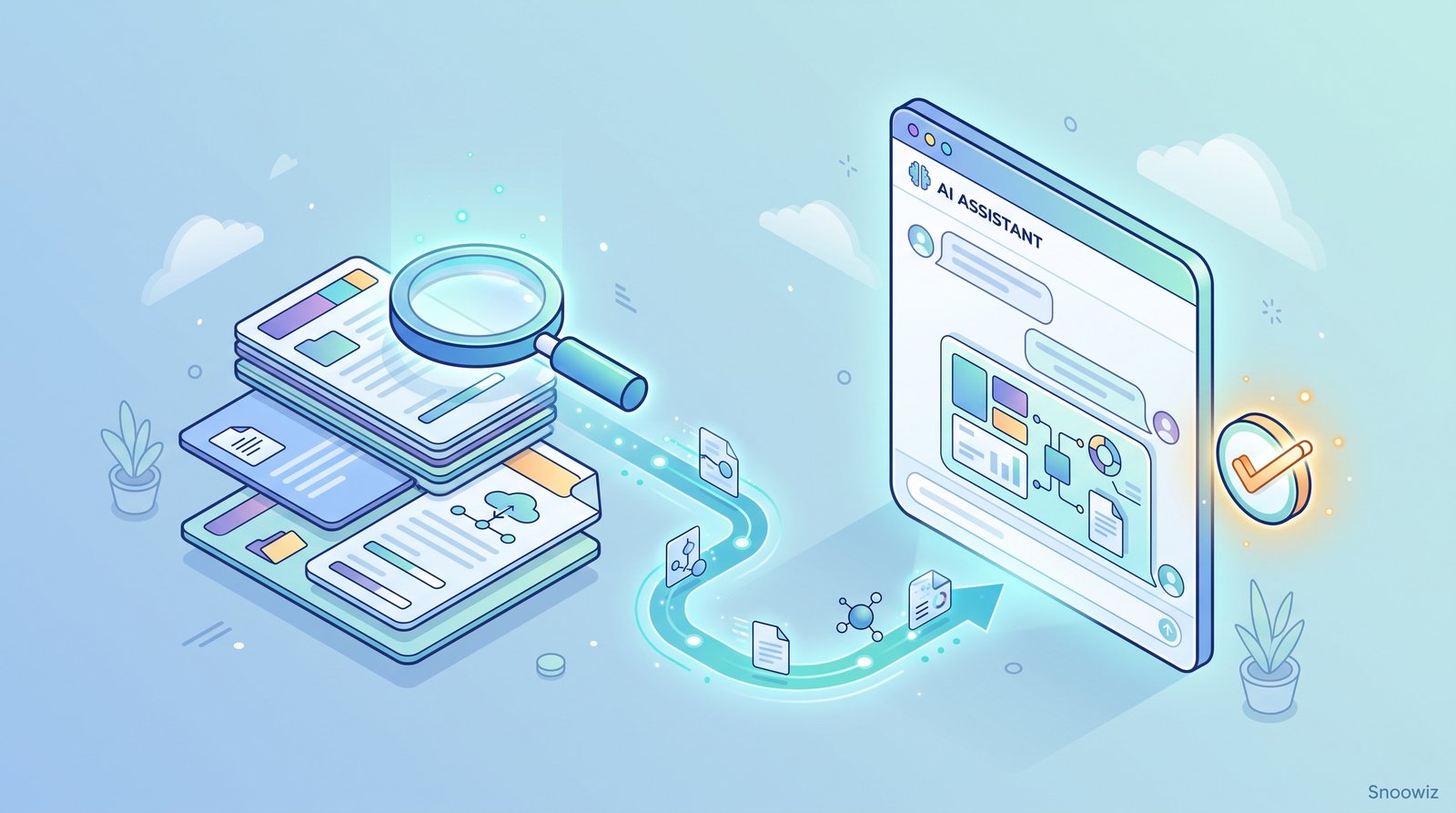
Every business that's deployed an AI chatbot has hit the same uncomfortable moment: a customer asks a simple question, and the AI confidently gives an answer that's completely wrong. Not vague — confidently, specifically wrong, stated with the same tone as a correct answer. This is what AI researchers call hallucination, and it's the single biggest reason businesses hesitate to fully trust AI with customer-facing conversations. RAG tuning is the fix, and understanding it is worth ten minutes of your time before you deploy any AI assistant that talks to real customers.
What RAG Actually Means
RAG stands for Retrieval-Augmented Generation. In plain terms: instead of an AI model answering purely from what it learned during training — which is frozen at a certain point in time and full of gaps — a RAG system first retrieves relevant information from a business's actual, current documents, then uses that retrieved information to generate its answer.
The difference is the difference between asking a new employee to answer a customer question from memory of a training session six months ago, versus asking them to pull up the actual current policy document, read the relevant section, and answer based on that. One is guessing based on general impressions. The other is answering based on the real, current source of truth.
Why Chatbots Without RAG Are a Liability
A general-purpose AI model, used without RAG, doesn't know your specific pricing, your specific return policy, your specific product catalog, or anything that changed since it was trained. When asked something specific, it has two options: say "I don't know," or generate a plausible-sounding answer based on patterns from its training data. Left ungoverned, AI models lean toward the second option far more often than businesses expect — because sounding confident and helpful is, in a sense, what they're optimized to do.
This is precisely the scenario that erodes customer trust fastest: a chatbot that sounds authoritative while being wrong. A customer who gets an obviously unhelpful "I'm not sure" response is mildly annoyed. A customer who gets a confident, wrong answer about pricing or a return policy — and later discovers it was wrong — loses trust in the business itself, not just the bot.
How RAG Tuning Actually Works
1. Building the knowledge base The business's actual documents — product catalogs, FAQs, policies, pricing sheets, support documentation — are organized and prepared as the AI's source material. This is the foundation everything else depends on: if the source documents are outdated or incomplete, the AI's answers will be too, no matter how well the rest of the system is built.
2. Chunking the information correctly Documents get broken into appropriately sized pieces so the AI can retrieve precisely the relevant section, rather than an entire lengthy document (too much irrelevant context) or a fragment too small to be useful (missing context). Getting chunk size right is one of the most technical, and most underrated, parts of RAG tuning.
3. Retrieval tuning When a customer asks a question, the system needs to accurately find the most relevant pieces of information from the knowledge base — not just anything that superficially matches keywords. This is where a lot of poorly built RAG systems fail: pulling in loosely related information that leads the AI toward a plausible-sounding but still inaccurate answer.
4. Grounding the generated response The final answer needs to be explicitly built from the retrieved information, with system prompt instructions that discourage the AI from filling gaps with generated guesses when the retrieved information doesn't fully answer the question. A well-tuned system says "I don't have that information — let me connect you with someone who does" rather than confidently improvising.
5. Ongoing testing and refinement RAG systems aren't "set and forget." As a business's information changes — new products, updated policies — the knowledge base needs updating, and retrieval accuracy needs periodic testing against real customer questions to catch gaps before customers do.
What a Well-Tuned RAG System Actually Feels Like
Customers interacting with a properly RAG-tuned chatbot generally can't tell it's an AI at all — it answers specific, detailed questions about the actual business accurately, admits when something falls outside its knowledge, and hands off to a human cleanly when needed. This is the standard businesses should be aiming for, and it's achievable — but only with the retrieval and grounding work done properly, not by simply connecting a general AI model to a website chat widget.
Signs Your Current AI Chatbot Needs RAG Tuning
It gives different answers to the same question asked slightly differently
It confidently states information that turns out to be outdated or incorrect
It struggles with anything specific to your business — pricing tiers, product specifications, current promotions
It rarely says "I don't know," even when it clearly should
Customer complaints reference the bot giving wrong information
Any one of these is a strong signal that the chatbot is running on general knowledge instead of being properly grounded in your actual business information.
The Business Case for Getting This Right
A poorly tuned AI chatbot doesn't just fail to help — it can actively damage customer trust and create real liability, particularly for pricing, availability, or policy-related questions. A properly RAG-tuned system, on the other hand, becomes a genuine asset: available around the clock, consistently accurate, and capable of handling the repetitive questions that otherwise eat up a support team's time — freeing real people to handle the conversations that actually need human judgment.
Getting Started the Right Way
If you're considering deploying an AI chatbot for customer-facing conversations, the RAG tuning work isn't an optional add-on — it's the difference between a tool customers trust and one that quietly damages your credibility every time it guesses wrong. Starting with a small, well-organized knowledge base covering your most common customer questions, tested thoroughly before launch, is a far safer path than deploying broadly and fixing accuracy problems after customers have already noticed them.
#ai
#chatbots
#customerexperience
#technology
#ragtuning